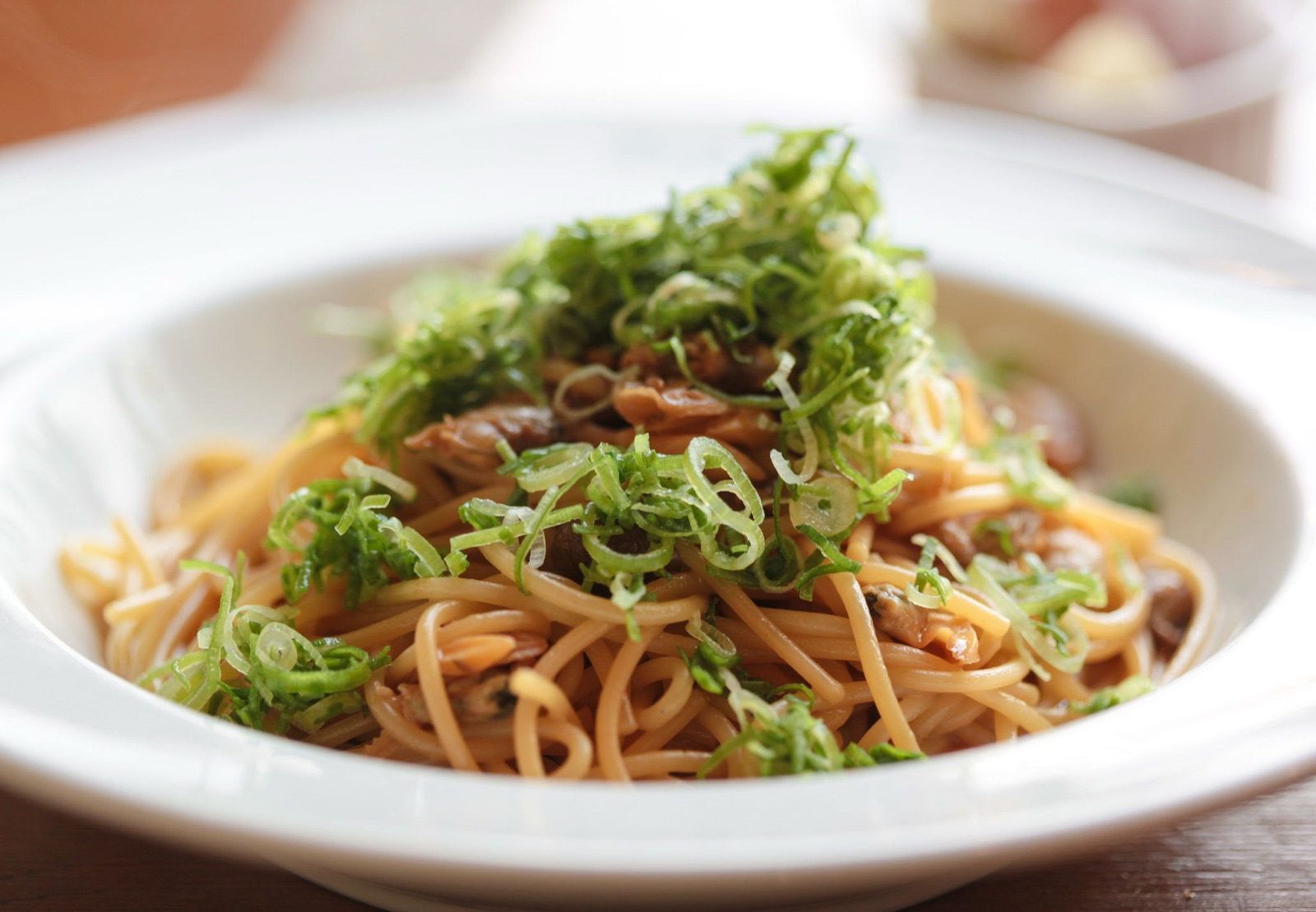
Confession: I never actually ate this. It was on the menu at the Kimpton Shinjuku and I kept meaning to order it — wafū spaghetti, Japanese-style, almost aggressively simple. Butter, tamari, a little parmesan, a scatter of green onion. That's it. No cream, no garlic, no tomato. I walked past it every morning and never pulled the trigger.
Then later in the trip we saw Japanese popcorn seasoned with butter and soy, and the combination lodged itself in my brain. I flew home today, and now I can't stop thinking about that spaghetti I never ordered. So I'm making it from memory and a craving — which is honestly the best reason to cook anything. Oishii.
Ingredients
- 200g spaghetti (about ½ lb)
- 3 Tbsp butter
- 2 Tbsp tamari (or soy sauce)
- ⅓ cup grated parmesan, plus more to finish
- 2 green onions, thinly sliced
- A pinch of kosher salt
- Black pepper, to taste
- A splash of reserved pasta water
Let’s make it
Boil the spaghetti in well-salted water until just shy of al dente—a minute less than the box says, since it'll keep cooking in the pan. Before you drain it, scoop out about ½ cup of the pasta water. This is the part people skip, and it's the part that makes the sauce a sauce instead of a slick.
While the pasta cooks, melt the butter in a wide pan over low heat. You don't want it to brown—just melt and get foamy. Add the tamari and let it bubble together for a few seconds. It'll smell incredible the moment they meet.
Pull the pasta straight from the pot into the pan with tongs (a little extra water clinging to it is fine). Turn the heat to medium and toss. Add the parmesan and a splash of the reserved pasta water, then keep tossing until the cheese melts and the sauce goes glossy and coats every strand. If it looks dry, add a little more water; if it's loose, let it cook down for another few seconds.
Take it off the heat. Add most of the green onion, a pinch of salt, and a few grinds of black pepper, then toss once more. Taste here—tamari brands vary a lot in saltiness, so adjust the salt to your liking.
Twist it into a nest in the bowl and finish with the rest of the green onion and one more dusting of parmesan. The green onion isn't just garnish—that sharp, fresh bite cuts the richness and is the difference between good and craveable. Eat it immediately, while it's hot and glossy. This is not a dish that waits for you.
Notes: Tamari is a touch less salty and rounder than soy sauce—and it's wheat-free, so this stays gluten-free if your pasta is. A pinch of dashi powder, or swapping in browned butter, both push it further into umami territory. Some shops top it with thin strips of nori or a soft egg yolk—both excellent, neither necessary.